
Why Surface-Level Change Doesn't Last (And What Actually Does)
The Change That Fades by Friday
It’s Monday morning and you’re in a great mood. You blast your favorite music and get straight to work cleaning the kitchen. You make those counters shine so bright that your family will need to wear their shades to look at it. The air smells like citrus and effort, the true mark of a job well done.
You step back, hands on your hips, and think, This time, it’s different. This kitchen will NOT be messy ever again!
However, by Friday, there’s a pile of dirty dishes in the sink, mail from the whole week on the counter, and a haunting return of the familiar, “Let’s order pizza because we don’t have a clean dish” conversation.
What the heck happened?
You did what they said to do. You set the goal. You started the routine. You said the affirmation, (My kitchen is always clean.) And you promised yourself—this time, I mean it!
And yet… something pulls you back into the same patterns you swore you’d outgrow. I mean honestly, speaking from experience here, why is it so darn hard to rinse a dish and put it in the dishwasher?!?
If change feels real in the moment… why does it disappear when life resumes?
That’s what we’re unpacking today. Because the truth isn’t that you lack discipline, willpower, or desire.
It’s that most change is happening at the wrong level.
The Illusion of Change

Surface-level change feels productive. It gives you quick wins, a sense of control, and a temporary lift.
You swap the pop for water.
You start waking up earlier.
You write goals in a fresh notebook.
And for a moment, it works.
But here’s the part we must understand:
Behavior change without identity change doesn’t last.
According to research published in the European Journal of Social Psychology, it takes an average of 66 days to form a habit—and even then, consistency depends heavily on internal alignment, not just repetition.
Translation?
You can repeat an action over and over… and still not be able to sustain that change.
That’s why surface-level change feels like trying to hold water in your hands. You grip tighter, but the water still slips through your fingers.
Why Surface-Level Change Breaks Down
You're Changing Behavior, Not Belief
You tell yourself: “I’m going to be more confident.”
But underneath?
A quieter voice whispers: “Don’t draw attention. Stay safe.”
That whisper will override behavior every single time. Psychology calls this cognitive dissonance—the tension between what you do and what you believe. And when the two clash, your brain will almost always default to the belief.
Not because you’re weak.
Because your mind is wired for consistency.

You're Solving Symptoms, Not the Source

Imagine you struggle with stress eating. You have had enough and declare loudly and proudly that you will no longer eat because you're stress is telling you to.
So...
You remove the snacks. You set rules. You track calories.
But the stress?
Still there. Sitting in your chest. Tight. Unprocessed. And eventually, something gives.
A study from the American Psychological Association highlights that chronic stress directly impacts decision-making and impulse control, making behavioral changes harder to sustain when emotional regulation isn’t addressed.
You didn’t fail the plan.
The plan never addressed the root.
You're Relying on Motivation Instead of Structure
Motivation feels like a spark. It's bright and energizing. It's also temporary.
Structure is the fireplace; quiet, consistent, and reliable.
Research from Stanford University’s behavior scientist, BJ Fogg, emphasizes that behavior change sticks when it’s tied to existing routines, not bursts of motivation.
In other words:
You don’t rise to the level of your goals.
You fall to the level of your systems.

A Real Life Snapshot: When Change Finally Sticks
Not long ago, a woman walked into my office carrying more than her body should have been asked to hold. Her shoulders stayed lifted, even at rest. Her breath sat high in her chest. Every word came out measured, like she was bracing for something unseen.
She had tried everything.
New routines. New goals. New plans.
Each one worked… until it didn’t.
So we didn’t start with her habits. We started with stillness. We slowed her breathing, softened her awareness, and traced the tension—not just where it lived in her body, but where it began in her story.
Then, it was as if I was looking at a completely different person. And the changes she wanted so badly, but endlessly struggled to attain? She's ROCKIN' it!
Change didn't happen overnight. It didn't make a dramatic entrance into her life.
She worked steadily, mindfully, and purposely to become the woman she wanted to be.
Because this time, the change wasn’t placed on top of her life.
It was built from within it.
What Actually Creates Lasting Change?
Let's get to the part that matters most.
If surface-level change doesn't last... what does?
Identity-Level Change

Instead of asking, “What should I do?”
Start asking, “Who am I becoming?”
James Clear, author of Atomic Habits, puts it simply: “Every action you take is a vote for the type of person you wish to become.”
When your actions reinforce your identity, change stops feeling forced.
It becomes natural.
Emotional Integration
Real change requires you to feel what you’ve been avoiding; not to stay stuck in it, but to process it.
Unprocessed emotions don’t disappear. They resurface through habits, reactions, and patterns.
Neuroscience shows that emotional processing engages the prefrontal cortex, improving regulation and decision-making over time.
In simple terms:
When you face it, you free yourself from it.

Nervous System Regulation

You can’t build a calm life from a dysregulated body.
If your system is in survival mode—fight, flight, freeze—your brain prioritizes safety, not growth.
Practices like breathwork, grounding, Reiki, and mindfulness don’t just “feel good.” They shift your physiology.
They tell your body: You’re safe now.
And from that place, change becomes possible.
Alignment Over Effort
You don’t need to push harder, you need to align deeper.
When your values, beliefs, and actions move in the same direction, effort decreases, resistance softens, and momentum builds.
That’s where change starts to hold.

The Turning Point Most People Miss
When you stop questioning your discipline and start getting curious about what’s happening beneath the surface, that is the moment when things start to change.
Not through force—but through awareness.
Most people believe change comes from pushing harder—more discipline, more effort, more control. However, real change begins the moment you stop trying to force yourself into different behavior and instead start noticing what’s actually going on inside you.
It’s the difference between forcing yourself to stick to a habit vs understanding why it’s hard in the first place.
Instead of asking:
“Why can’t I just stick with this?”
“What’s wrong with me?”
You shift to:
“What am I feeling right now?”
“What belief or fear is driving this?”
“What need isn’t being met?”
This is where judgment turns into curiosity. In this situation, curiosity is powerful because it opens the door instead of shutting it.
Closing the Loop: Change That Stays
Surface-level change is, for the most part, loud, quick, and visible.
Lasting change is quieter, slower, and rooted in your soul.
It happens in the moments no one sees. Like when you pause instead of react, or breathe instead of rushing into the fire.
When you choose differently—not because you have to, but because it feels true...
That’s the shift. That's the change that lasts!
Your Next Step
Take a moment to reflect on the following question:
Where in your life are you trying to change the surface… while the root remains untouched?
Don’t rush the answer.
Let it rise from within you.
And when it does, take one small step—not to fix it, but to understand it.
That’s where your real work begins.
And if you’re ready to go deeper—if you’re ready to create change that actually lasts—
I’d love to walk that path with you.
Book your complimentary strategy session and let’s uncover what’s beneath the surface… together.
You don’t need another quick fix.
You need a transformation that stays.
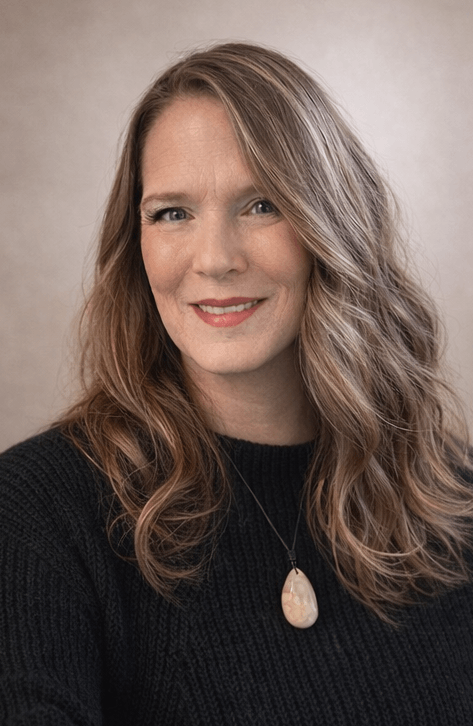
Jennifer A. Sayles is the Founder and Lead Practitioner of Crossroads Holistic Health Services in Michigan, where healing begins at the crossroads of mind, body, and spirit. As a Certified Holistic Health Practitioner, Master-Certified Life Coach, Reiki Master, Energy Healer, Aromatherapist, and Sound Healer, she blends evidence-informed coaching with holistic health and healing practices to support deep, lasting transformation.
Her work is rooted in helping people break cycles, release what no longer serves them, and move forward with clarity, confidence, and intention. Jennifer’s writing is both supportive and practical, offering real tools for growth while reminding you that you are capable of more than you’ve been led to believe.
Crossroads Holistic Health Services
8011 Gilford Rd.
Fairgrove, MI 48757
(989) 501-4567
Follow us!
Read our Company Policies HERE
Join our Letters from the Crossroads Newsletter Fam!
Subscribe now to get email updates.