The Top Misconceptions About Holistic Health: What It Is, What It Isn't, and Why It Matters
Holistic health has been misunderstood for so long that it sometimes feels like the truth needs a public relations team, a cup of herbal tea, and maybe a small megaphone.
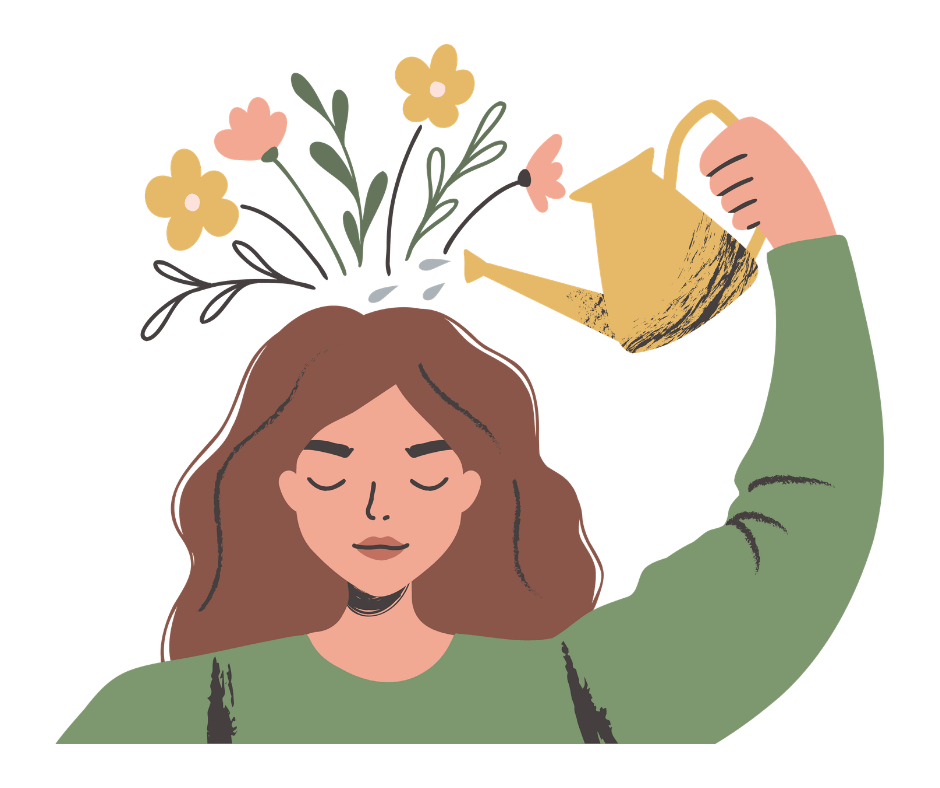
Some people hear the words holistic health and picture some "woo-woo" barefoot person with a crown of flowers on the top of their head who only eats vegetables, is anti-doctor, anti-science, meditates on the top of a mountain with a brass gong behind them.
But real holistic health is not about rejecting medicine, chasing trends, or becoming someone who never eats cake at a birthday party.
Real holistic health asks a better question:
What if you are not just a body with symptoms, but a whole person with a story?
That question changes everything.
It changes how you look at stress.
It changes how you listen to your body.
It changes how you understand exhaustion, pain, anxiety, grief, inflammation, sleep, food, relationships, purpose, and the quiet ache of feeling disconnected from yourself.
Holistic health does not dismiss the physical body. It widens the lens. It says your body matters, your mind matters, your emotions matter, your environment matters, your habits matter, your history matters, and your spirit matters too.
And because that idea is so simple, so human, and so deeply needed, it has also been twisted, mocked, over-marketed, and misunderstood.
So let’s talk about it.
Not in a fluffy way. Not in a “just think positive and drink lemon water” way.
But in a grounded, honest, whole-person way.
Because the truth is this:
holistic health is not less serious than conventional care.
When practiced responsibly, it is deeply serious.
It is personal.
It is practical.
It is empowering.
And for many people, it is the missing conversation they have been waiting for.
Misconception 1: Holistic Health Means Rejecting Conventional Medicine
Let's start with the big one...
Many people believe holistic health means you are “against doctors,” “against medication,” or “against science.”
No.
No, ma’am.
No, sir.
No, thank you.
Holistic health is not about throwing conventional medicine out the window. It's about asking what else needs attention alongside it.
There is a difference between alternative care and integrative care.
Alternative care is often used instead of conventional medicine. Integrative care combines conventional care with complementary approaches that support the whole person.
That distinction matters.
A responsible holistic practitioner does not tell you to stop taking prescribed medication. They do not diagnose you outside their scope. They do not pretend a breathing exercise replaces emergency care. They do not act like peppermint oil is a substitute for a cardiologist.
That is not holistic. That is dangerous.
True holistic care works best when it respects the role of conventional medicine while also recognizing that a lab result does not tell your whole story.
You may need the medication.
You may also need better sleep.
You may need surgery.
You may also need nervous system support.
You may need a diagnosis.
You may also need someone to ask, “What has your body been carrying for years?”
Holistic health is not anti-medicine.
It is anti-ignoring-the-rest-of-you.
Misconception 2: Holistic Health Is Not Evidence-Based
This one makes me want to lovingly pull up a chair and say, “Let’s talk.”
There is a difference between “not evidence-based” and “not yet fully understood.”
There is also a difference between a grounded holistic practice and someone on the internet making wild claims with a ring light and a discount code.
Holistic health is a broad field. Some practices have strong evidence. Some have emerging evidence. Some are rooted in traditional use and lived experience. Some need more research. And yes, some claims out there are exaggerated, misleading, or just plain irresponsible.
That is exactly why discernment matters.
According to the National Center for Complementary and Integrative Health, U.S. adults increased their use of complementary health approaches between 2002 and 2022, with yoga, meditation, and massage therapy showing some of the biggest increases. In 2002, 19.2% of adults used at least one of seven complementary approaches. By 2022, that number rose to 36.7%.
That is not fringe.
That is millions of people saying, “I need more support than the standard five-minute appointment can give me.”
Meditation was used by 17.3% of U.S. adults in 2022. Yoga was used by 15.8%. Massage therapy was used by 10.9%.
Why does that matter?
Because people are looking for tools that help them participate in their own healing.
And science is paying attention.
The World Health Organization has also recognized the growing role of traditional, complementary, and integrative medicine and emphasizes evidence-based approaches, safety, standards, and responsible integration into health systems.
So no, holistic health is not anti-science.
In its best form, holistic health respects research, honors lived experience, asks better questions, and keeps safety at the center.
Here is the honest truth
Evidence matters.
But so does the human being sitting in front of you.
A lab result can tell part of the story.
Your daily life tells another part.
Your body may whisper before it screams.
Holistic health teaches you to listen before the whisper becomes a roar.

Misconception 3: "Natural" Always Means Safe
This is where we need to be wise.
I love natural support. I love herbs. I love essential oils. I love the way plant-based tools can support relaxation, grounding, comfort, and daily wellness when used responsibly.
But natural does not automatically mean safe.
Poison ivy is natural.
Snake venom is natural.
Too much water is natural and still dangerous.
The National Center for Complementary and Integrative Health warns that herbs and botanical products can carry risks, including drug interactions, direct toxicities, and contamination. They also note that herbal and dietary supplements can act like other pharmacologically active compounds.
That is not meant to scare you.
It is meant to protect you.
Because you deserve education, not guesswork.
Aromatherapy, herbs, teas, tinctures, supplements, and natural remedies should be used with thought, respect, and proper guidance, especially if you are pregnant, nursing, managing chronic illness, preparing for surgery, taking medication, or caring for children.
The Crossroads common-sense rule
If something is powerful enough to help, it may also be powerful enough to harm when used incorrectly.
That does not make it bad.
It makes it worthy of respect.
Holistic health should never be reckless. It should be rooted in care, education, boundaries, and safety.
No fear. No shame. No “just take this and you’ll be fine.”
Real holistic wellness asks questions first.

Misconception 4: Holistic Health Is Only for "Spiritual" People
You do not have to own crystals to benefit from holistic health.
You do not have to meditate for an hour.
You do not have to know your moon sign.
You do not have to believe exactly what someone else believes.
Holistic health includes the body, mind, emotions, lifestyle, environment, relationships, and, for some people, spirituality. But spirituality does not have to mean religion. And holistic health does not require you to adopt a belief system that does not feel right to you.
For some, spirituality may mean prayer.
For others, it may mean nature, purpose, energy, intuition, connection, silence, music, creativity, or the moment they finally exhale after holding everything together all week.
The Cleveland Clinic describes integrative medicine as an evidence-based approach that treats the whole person: mind, body, and soul.
That does not mean someone is forcing a worldview on you.
It means your inner life matters.
Your stress matters.
Your grief matters.
Your sense of meaning matters.
Your emotional pain matters.
Your ability to feel safe in your own body matters.
You are more than your lab work. You are more than your diagnosis. You are more than the role you play for everyone else.
Holistic health makes room for the parts of you that often get ignored.
And sometimes, that is where healing begins.

Misconception 5: Holistic Health Is Just About Food and Supplements
Nutrition matters.
But holistic health is not just “eat kale and take magnesium.”
Please, for the love of all things holy, let's retire the idea that wellness is only about what is on your plate.
Food can support healing. Nutrients matter. Hydration matters. Blood sugar matters. Gut health matters.
But so do boundaries.
So does sleep.
So does the way you talk to yourself.
So does the emotional weight you carry.
So does the stress you keep minimizing because “everyone is busy.”
So does the resentment you swallow.
So does the grief you never had room to process.
So does the fact that your body may be exhausted from living in fight-or-flight for years.
Holistic health asks:
Are you nourished?
Are you rested?
Are you safe?
Are you connected?
Are you heard?
Are you living in alignment with who you are becoming?
Are you constantly pouring from an empty cup and calling it strength?
Sometimes the issue isn't the food on your plate.
Sometimes the issue is that your life has not made room for your humanity.
That is the kind of truth holistic health is willing to tell.
Misconception 6: Holistic Health Is a Quick Fix
Holistic health is not a magic wand.
I know. Rude.
We all want the thing that works by Tuesday.
The tea. The oil. The session. The affirmation. The protocol. The five-step plan. The “do this and your life changes overnight” promise.
But real healing is usually not a lightning strike.
It is more like sunrise.
Slow at first. Quiet. Almost invisible. Then one day, you notice the room is not as dark as it used to be.
Holistic health works with patterns. And patterns take time.
Your body may need time to regulate.
Your nervous system may need time to trust safety.
Your mind may need time to stop expecting disaster.
Your habits may need time to become familiar.
Your heart may need time to believe it is allowed to want more.
That does not mean you cannot feel relief quickly. Sometimes you can. A Reiki session, a sound healing session, a guided meditation, a supportive coaching conversation, or a few intentional lifestyle changes can create an immediate shift.
But lasting change usually comes from repetition, awareness, and support.
You do not heal a lifetime of self-abandonment with one bubble bath.
You do not rebuild your nervous system with one deep breath.
You do not create a new life while continuing to betray your own needs every day.
Holistic health is not a shortcut.
It's a return to homeostasis.
Misconception 7: Holistic Practitioners Think Everything Is "Mindset"
Let’s be clear.
Mindset matters.
But mindset is not everything.
And telling someone to “just think positive” when they are struggling is not holistic. It is dismissive with glitter on it.
You are allowed to have hard feelings.
You are allowed to be angry.
You are allowed to grieve.
You are allowed to be tired.
You are allowed to say, “I need help.”
You are allowed to have a diagnosis, a trauma history, chronic pain, depression, anxiety, autoimmune issues, family stress, financial stress, and still not be reduced to “you just need to raise your vibration.”
Real holistic work does not shame you for being human.
It helps you understand the connection between your thoughts, emotions, body, energy, habits, environment, and choices without blaming you for everything you have endured.
You are not broken because you are struggling.
You are responding to something.
Holistic health helps you ask what.

Misconception 8: Holistic Health Is Only Used as a Last Resort
While it's true that many people look to holistic health when their doctor claims they've exhausted all medical interventions, yet they are still sick, holistic health isn't only "last resort" care.
It is also for prevention.
It is for maintenance.
It is for self-awareness.
It is for personal growth.
It is for the season when nothing is “wrong,” but something still feels off.
Holistic Health is for the person who says:
“I don’t know what I need, but I know I can’t keep living like this.”
“I have done everything I was supposed to do, so why do I still feel empty?”
“I want to feel like myself again.”
“I want peace, but I do not know where to start.”
You do not need to hit rock bottom before you are allowed to seek support.
You do not need to prove your pain.
You do not need to earn rest.
You do not need to wait until your body forces you to listen.
Holistic health can help you build a relationship with yourself before burnout becomes your personality.
And honestly, that is a gift.

Misconception 9: Holistic Health Is Expensive, Complicated, and Out of Reach
Some parts of wellness culture have become expensive. There is no denying that. Between supplements, memberships, retreats, powders, devices, programs, and products, it can start to feel like healing requires a second mortgage and a color-coded pantry.
But holistic health does not have to be complicated.
Some of the most powerful foundations are simple:
· Drink water.
· Eat enough real food.
· Breathe with intention.
· Step outside.
· Sleep when you can.
· Move your body gently.
· Create a calming evening rhythm.
· Talk to someone safe.
· Pause before you react.
· Notice what drains you.
· Notice what restores you.
· Tell the truth about what you need.
Simple does not always mean easy.
But simple can be powerful.
You do not need to overhaul your whole life in one weekend. In fact, please do not. That usually ends with 11 abandoned habits and a suspicious amount of guilt.
Start with one honest shift.
One glass of water before coffee.
One five-minute breathing break.
One boundary.
One walk.
One earlier bedtime.
One meal that supports your body.
One conversation you have been avoiding.
One moment where you ask, “What do I actually need right now?”
Every single person can do one thing to improve their life.
You can do one thing.
What Holistic Health Actually Is
Most misconceptions about holistic health come from fear, bad information, exaggerated marketing, or painful experiences with people who overstepped.
At its heart, holistic health means you are more than one symptom, one diagnosis, one habit, one trauma, one emotion, one role, or one hard season.
Holistic health is whole-person care.
It looks at the body, mind, emotions, energy, lifestyle, environment, spirit, relationships, purpose, and inner life.
It honors science and lived experience.
It values prevention and support.
It encourages personal responsibility without blame.
It invites you to participate in your well-being.
It recognizes that healing is not just the absence of symptoms. It is the presence of connection, balance, awareness, strength, peace, and self-trust.
And no, that does not mean you will never struggle.
It means you will not have to abandon yourself while you do.
It means you stop asking, “What is wrong with me?”
And begin asking, “What is my life trying to show me?”
That question can open a door.
And sometimes, one open door is enough to change the path.

The Bottom Line: You Are a Human Being... and Holistic Health Treats You as Such
You are not a machine.
You cannot replace rest with caffeine forever.
You cannot keep swallowing stress and expect your body to never speak up.
You cannot shame yourself into wellness.
You cannot disconnect from your needs and call it strength.
At some point, your body will ask for care.
Your heart will ask for honesty.
Your spirit will ask for space.
And your life will ask whether you are ready to stop surviving on autopilot.
That is where holistic health meets you.
Not above you.
Not in judgment of you.
Right at the crossroads.
The place where you decide whether you keep pushing through the same patterns or begin listening to the deeper truth within you.
Holistic health is not about living a perfect life.
It is about being present.
It is about learning the language of your own body.
It is about honoring your story without letting it trap you.
It is about choosing support before you completely fall apart.
It is about becoming an active participant in your own healing.
And if you have been feeling disconnected, exhausted, overwhelmed, or unsure where to begin, maybe this is your invitation.
Not to overhaul your entire life overnight.
Not to become someone else.
But to come back to yourself, one honest step at a time.
Ready to Begin?
At Crossroads Holistic Health Services, healing begins by looking at the whole person, not just the surface struggle.
If you are ready to explore what your body, mind, and spirit may be trying to tell you, I invite you to schedule your complimentary Strategy Session.
Together, we can talk through where you are, what you need, and what kind of support may help you move forward with more clarity, peace, and confidence.
All you need is the willingness to begin ❤️
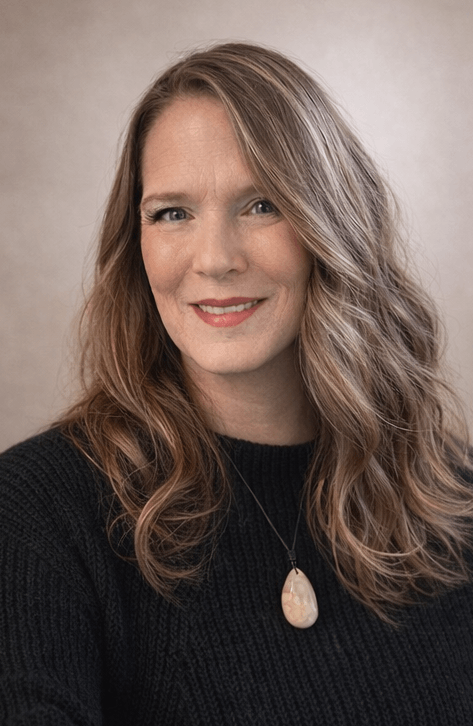
Jennifer A. Sayles is the Founder and Lead Practitioner of Crossroads Holistic Health Services in Michigan, where healing begins at the crossroads of mind, body, and spirit. As a Certified Holistic Health Practitioner, Master-Certified Life Coach, Reiki Master, Energy Healer, Aromatherapist, and Sound Healer, she blends evidence-informed coaching with holistic health and healing practices to support deep, lasting transformation.
Her work is rooted in helping people break cycles, release what no longer serves them, and move forward with clarity, confidence, and intention. Jennifer’s writing is both supportive and practical, offering real tools for growth while reminding you that you are capable of more than you’ve been led to believe.
Crossroads Holistic Health Services
8011 Gilford Rd.
Fairgrove, MI 48757
(989) 501-4567
Follow us!
Read our Company Policies HERE
Join our Letters from the Crossroads Newsletter Fam!
Subscribe now to get email updates.